
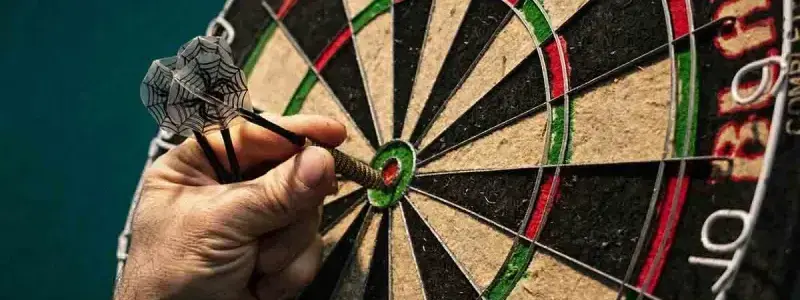
Soft-Tip Darts for Beginners: Smart or Soft?
Snap. Your very first throw, and the plastic tip shears clean off against the board. Your friend just laughs and tosses you a spare — with soft-tip darts, that's a fifty-cent fix, not a hole in the drywall. That forgiveness is exactly why so many new players start here, and it's worth knowing whether you should too.
What Makes a Dart "Soft-Tip"
A soft-tip dart has a flexible plastic point instead of a sharpened steel one. It's built to land in the small holes of an electronic dartboard rather than pierce a bristle board.
The rest of the dart — barrel, shaft, flight — works the same as any other. Only the point and the typical weight change.
Why Soft-Tip Darts Suit Beginners
Safety First
A plastic point won't puncture skin, furniture, or the wall behind the board the way steel will. That matters in homes with kids, pets, or roommates who walk through your throwing lane.
Misses still sting a little, but they don't leave permanent marks. You can practice freely without babysitting every throw.
Lighter Weight, Better Feedback
Soft-tip darts usually weigh 16–20 grams, noticeably lighter than most steel-tip sets. A lighter dart forces you to throw with a smooth, deliberate release instead of muscling it.
That builds clean mechanics early. Bad habits are easier to avoid than to unlearn.
The Board Keeps Score for You
Soft-tip darts pair with electronic dartboards, which handle all the math. No chalk, no mental arithmetic mid-game, no arguments about who's on 57.
For a beginner, that means every ounce of attention goes into aim. See our guide to electronic dartboards if you're picking one out.
Soft-Tip vs. Steel-Tip: The Honest Comparison
Steel-tip is the traditional pub-and-tournament format, thrown at a sisal bristle board. It feels more solid in the hand and is the standard in most professional leagues.
Soft-tip trades that tradition for safety, automatic scoring, and cheaper mistakes. Bounce-outs happen more often, but a bent tip costs pennies to replace.
You can technically throw soft-tips at some boards they weren't made for, but don't. The weight and tip differences will throw off your precision, so pick one format and practice it consistently.
How to Choose Your First Set
Start with weight. Most beginners do best between 16 and 20 grams — heavy enough to fly straight, light enough to teach a proper release. If you're unsure, our breakdown of what weight darts you should use goes deeper.

- 21 matched 17-gram darts keep group play going through worn tips and lost darts
- Knurled nickel-silver barrels with precision rings give a secure, consistent grip
- Twist-top storage jar keeps the whole set organized at home or on the road
Stick to proven brands like Harrows, Winmau, or Target Darts. A reliable starter set costs far less than you'd expect, and we've rounded up the best soft-tip darts if you want specific picks.
Buy a bag of spare tips with your first set. You will break tips — everyone does — and swapping one takes seconds.
Keeping Them in Shape
Maintenance is simple: replace tips as they bend or dull, and check that shafts and flights sit tight. Loose hardware is the most common cause of wobbly throws.
Store darts in a case rather than leaving them in the board. Tips last longer and flights stay crisp.
Will You Outgrow Them?
No. Soft-tip isn't a training-wheels format — it has its own leagues, official electronic tournaments, and professional players.
If you later want to try steel-tip, the throwing fundamentals you built will carry over. Nothing you learn on a soft-tip setup is wasted.
Grab a 16–20 gram set, a handful of spare tips, and start throwing tonight.