
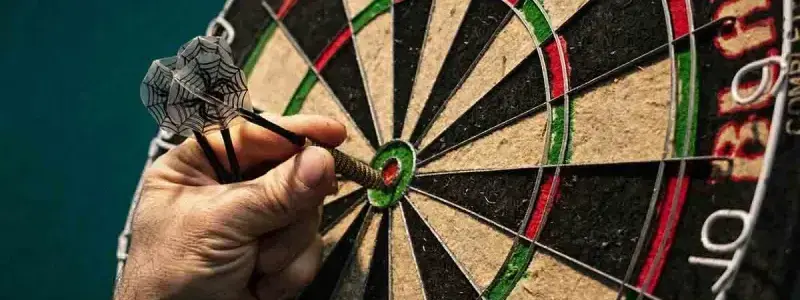
The Release: Where Every Throw Goes Wrong
You mutter "it slipped" as the dart flutters into the 5 like a wounded bird. It didn't slip — your fingers let go late, and everything went wrong in the last four inches of the throw.
The release is the moment your fingers stop touching the dart, and it's the hardest part of the throw to feel, see, or fix. Here's what a clean release actually is, and how to repair a bad one.
What a Clean Release Looks Like
A clean release lets the dart leave along the path your forearm is already tracing — the fingers open, they don't push, flick, or steer. The dart comes out smooth and point-forward, riding the arc you gave it while your hand keeps moving into the follow-through.
Timing matters more than anything else. Release too early and the dart balloons high; hang on too long and it drives low into the board or the floor.
The dart should also spin off your fingers without being grabbed on the way out. Fingers that trail or snag the barrel are what cause that fluttering, wobbling flight.
Grip Pressure Sets Up the Release
You can't release cleanly from a strangled grip. Hold the dart firmly enough that it won't slip, and no more — think of holding a small bird, not a hammer.
Use the hold that lets all your gripping fingers leave the dart at once. Whether that's two fingers and a thumb or three, our guide to gripping a dart covers finding the grip that fits your hand.
Tension is the silent killer here. A tight forearm slows your fingers unevenly, so one finger always leaves late and drags the dart off line.
Read Your Misses to Find Your Release
Where you miss tells you when you're letting go:
- Consistently high: releasing early, often with a wrist flicking upward.
- Consistently low: releasing late, holding the dart past the top of the arc.
- Wobbling, fishtailing flight: a finger dragging on the barrel, or the pinky snagging the dart on exit.
- Scattered everywhere: inconsistent timing — the release point changes from throw to throw.
Watch how the darts sit in the board, too. Darts landing at odd angles, some point-up and some point-down, usually mean your release timing is drifting between throws.
Drills That Rebuild the Release
- Slow-motion throws: from close range, throw at half speed and feel the exact instant the fingers open. Speed hides the release; slowness exposes it.
- One-finger-less drill: briefly practice with one fewer finger on the barrel. It exaggerates any finger that's been steering.
- Same-spot drill: throw 20 darts at one target caring only about identical release feel, not score.
- Film your hand: a slow-motion phone clip from the side shows early flicks and dragging fingers you can't feel.
Whatever you find, change one thing at a time. The release is coupled to the rest of your throw, and rebuilding everything at once just trades one error for three.
Release Mistakes to Avoid
- Squeezing harder under pressure, which delays the release exactly when you need it most.
- Trying to "place" the dart with the fingertips instead of letting the arm's arc do the aiming.
- Adding wrist snap for power a 20-gram dart doesn't need.
- Blaming the dart — though badly worn flights can fake a wobble a clean release doesn't deserve.

- 120 flights in 40 designs keep backups on hand for every session
- Thick polyester construction bends less and outlasts standard flights
- Fits steel tip and soft tip darts with any standard shaft
Should the dart roll off my fingertips?
It should slide off as your fingers extend together, with a natural touch of spin. Any deliberate flick or roll you add is one more variable to keep identical.
Where in the arc should I release?
Just past the top of your forearm's swing, as the hand travels toward the target. Don't chase that spot consciously, though — groove it with slow reps until it happens on its own.
Why does my release fall apart in matches?
Pressure means grip tension, and grip tension means late release. A pre-throw routine with one deliberate exhale keeps match darts feeling like practice darts.
Spend one session throwing at half speed, and let your fingers finally show you what they've been doing.
The Follow-Through Mistake Killing Your Aim
How to Grip a Dart (Without Strangling It)