
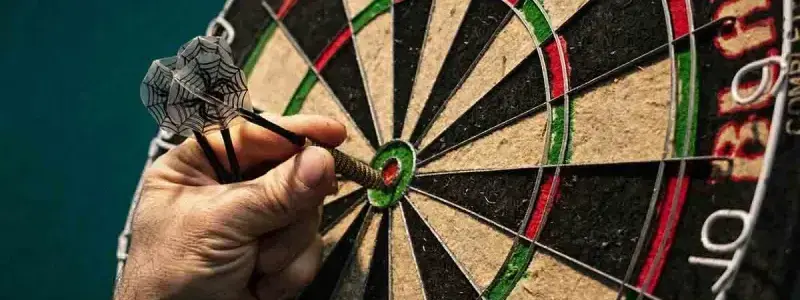
Dartboard Height: Yours Is Probably Wrong
Five feet eight to the bull, seven feet nine and a quarter to the line — miss either number and every practice session grooves a throw that falls apart on a regulation board. The tape measure is the one piece of dart gear you can't skip.
The Official Numbers
Steel-tip play puts the center of the bullseye 5 feet 8 inches (173 cm) above the floor. The throw line — the oche — sits 7 feet 9.25 inches (237 cm) back from the face of the board.
Soft-tip is nearly identical: same 5'8" bull height, but electronic leagues stretch the throw to 8 feet (244 cm). That extra bit of distance is the only difference between the two setups.
Both the World Darts Federation and the PDC play to the steel-tip standard. Set your board to these numbers and your home game transfers to any pub, league, or tournament on Earth.
Why 5'8" and 7'9.25"?
The bull sits at 5'8" because that's roughly eye level for a player of average height. The distance has messier roots — old pubs set the line by laying three beer crates end to end.
Depending on the pub, you might've thrown from anywhere between 7 and 9 feet. The 7'9.25" compromise went international in the 1970s and hasn't budged since.
Measuring the Height
Mount the board first, then measure from the floor to the center of the bull — never to the board's top or bottom edge. Our guide to hanging a dartboard walks through the mounting itself.
Want a second checkpoint? A standard board is 18 inches across, so the top edge should land around 6'5".
Measuring the Distance
Run the tape horizontally from the face of the board back to the throw line. Don't start at the wall — boards stick out an inch or two, and that offset quietly shortens your real throwing distance.
The Diagonal Shortcut
One measurement confirms both numbers at once: the line from the bull's center to the back edge of the oche should read 9 feet 7.5 inches (293 cm). If the diagonal is right, your height and distance are both right.
Tape that diagonal once and you've got a permanent sanity check. It takes ten seconds to re-run whenever the setup looks off.
Marking the Throw Line
Both feet must stay behind the oche, though leaning over it is perfectly legal as long as they do. Tape works fine at home, but a raised dart throw line gives your toes a boundary they can feel mid-game.

- Projects a crisp laser throw line onto the floor, replacing worn tape and chalk
- Adjustable beam sets exact regulation distance for steel tip or soft tip play
- Bright line stays visible in daylight or dim game rooms and settles foot faults
Leave at least 2 feet of clear floor behind the line. A cramped run-up changes your stance without you ever noticing.
Mistakes That Sneak In
Measuring to the top of the board instead of the bull is the classic — it plants the bull about 9 inches too low. Every dart you throw at that board trains the wrong arm angle.
Cabinet owners make the second mistake: measuring from the wall. A dartboard cabinet pushes the face out from the drywall, so always measure from the board itself.
Sloped floors and rugs that bunch up under the oche shift your distance too. Re-check the diagonal every few months, especially after moving furniture.
Quick Reference
- Bull height: 5 ft 8 in (173 cm) for both steel-tip and soft-tip.
- Steel-tip throw distance: 7 ft 9.25 in (237 cm) from the board face.
- Soft-tip throw distance: 8 ft (244 cm) from the board face.
- Diagonal check (steel-tip): 9 ft 7.5 in (293 cm) from bull to oche.
Measure the diagonal once, mark it, and the only argument left is who throws first.