
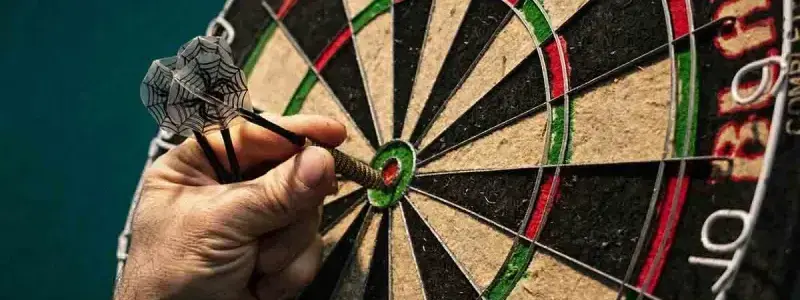
First Darts: Spend This, Not a Penny More
Twelve dollars for the blister pack in one hand, ninety for the tungsten set locked behind the counter — and the shelf between them offers a dozen ways to overthink it. For a first set, the honest answer is that both ends are probably the mistake.
The Short Answer: $25 to $50
For most beginners, a sensible first set of darts costs roughly $25 to $50. That buys a decent tungsten-alloy barrel, spare flights, and spare shafts without paying for engineering you can't feel yet.
| Price band | What you're getting | Verdict |
|---|---|---|
| Under ~$25 | Brass or nickel-silver, fat barrels, loose points | Costs you more later |
| $25–$50 | Tungsten-alloy barrel with spares included | The beginner sweet spot |
| Over $50 | Precision grip machining and branding | Wasted until your throw settles |
Below the range, you're buying darts you'll replace within months. Above it, you're paying for refinements a beginner's throw can't use.
Why the Cheapest Darts Cost You More
Brass darts are bulky because brass is light — the barrel has to be thick to reach a usable weight. Thick barrels crowd each other in the treble bed and literally block your own good darts, which is the core of the brass vs nickel vs tungsten story.
Cheap sets also wear fast. The knurling smooths out, the points loosen, and the flights shred within weeks — which is why most players who start on a $12 set buy a real one within a couple of months anyway.
Why Premium Darts Are Wasted on Day One
High-end darts are built around a specific, repeatable throw, and beginners don't have one yet. Your grip, stance, and release will all change in your first year — sometimes in your first month.
Premium 95 percent tungsten barrels reward a player who already knows exactly what weight, shape, and grip they want. Until you can name those preferences, you're buying answers to questions you haven't asked.
What Your $25–$50 Should Buy
Spend the money on these things, in this order:
- A tungsten-alloy barrel, ideally 80 percent tungsten or better
- A medium weight — somewhere from 22 to 26 grams is a safe starting zone
- A grip that's textured but not aggressive, so it doesn't tear at your fingers
- Spare flights and shafts, because you will break them
Weight matters more than brand at this stage. If you're unsure where to start, read up on what weight darts you should use before you commit.
Budget for the Small Stuff
Flights and shafts are consumables, like guitar strings. A few extra sets cost little and save you from playing with a torn flight that wobbles every throw.
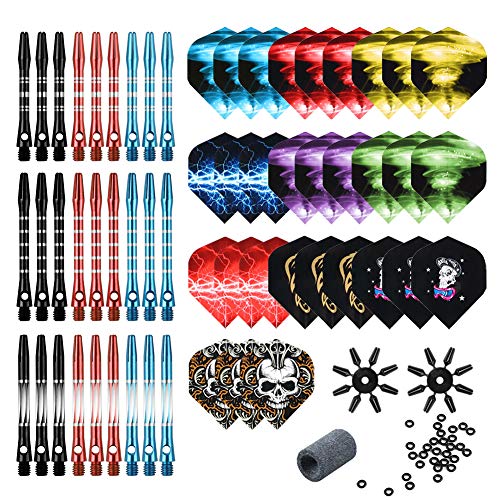
- 104 pieces of spares: aluminum shafts, flights, O-rings, flight savers, and a sharpener
- Thick PET flights hold their shape for a stable, consistent flight path
- Flight savers cut wear on your flights and fit every shape and material
A simple case is worth adding too, since loose darts in a bag bend points and crush flights. None of this should push your total much past $60 all-in.
First-Purchase Mistakes
Don't buy darts because a professional throws them. Pro models are tuned to one specific player's release, and their weight and grip may fight yours.
Don't grab the heaviest darts on the shelf thinking they'll fly straighter. Heavy darts can mask throwing flaws early, then hold you back once your technique improves.
And don't buy two cheap sets instead of one decent one. You'll learn faster with a single consistent set than by switching between mediocre ones.
Quick Answers
Is $20 enough if money is tight?
Yes — a basic tungsten set at $20 beats any brass set. Prioritize tungsten content over accessories if you have to choose.
When should you upgrade?
When your throw stabilizes and you can name what you want changed — lighter, slimmer, grippier. That usually takes months of regular play, and our guide to the best darts for beginners can carry you until then.
Set a $40 budget, buy one solid tungsten set with spares, and put the rest toward practice time.