
Fix Your Darts: Tips, Shafts, Flights
A snap at the barrel, and dart three is out of the game with a stub of nylon buried in the threads. It looks fatal, but every part of a dart forward of the barrel is a wear item — and all of it swaps out in minutes.
Darts are modular: tip, barrel, shaft, flight. The barrel lasts a lifetime, and everything else is designed to be replaced.
The Wear Parts at a Glance
| Part | Replace it when | How it attaches |
|---|---|---|
| Soft tip | Bent, cracked, or snapped | Screws into the barrel |
| Steel point | Rarely — bent or loose | Press-fit, needs a repointing tool |
| Shaft | Snapped, cracked, or won't stay tight | Screws into the barrel |
| Flight | Torn, creased, or won't hold its cross | Slots into the shaft |
Replacing Soft Tips
Soft-tip darts use threaded plastic tips that screw into the barrel. They bend and snap constantly, which is normal — the tip sacrifices itself to protect the electronic board.
To replace one, unscrew the old tip counterclockwise and thread the new one in finger-tight. Don't crank it with pliers, or you'll snap the new tip in the threads.
If a tip breaks off flush, grip the exposed stub with pliers or use a broken-tip extractor tool. Keep a tube of spares in your case, because soft-tip darts eat tips faster than you'd think.
Steel points are different. Most are press-fitted into the barrel, and swapping one needs a repointing tool — a job many players leave to a dart shop.
Replacing Shafts
Shafts screw into the barrel with a standard thread on most darts, commonly called 2BA. Unscrew the broken one and thread the new one in snug, never forced.
A shaft snapped flush in the barrel is the classic headache. Jam a spare tip, a screw extractor, or the corner of a flight into the stub and turn counterclockwise until it backs out.
When buying spares, match the thread and pick a material — nylon flexes and survives hits, aluminum feels solid but bends, and composite splits the difference. Length changes how the dart flies too, so the details in dart shafts are worth a read before you stock up.
Shafts that keep unscrewing mid-game aren't defective. A rubber O-ring seated at the base of the thread keeps them tight.
Replacing Flights
Flights slot into the cross-shaped cut at the back of the shaft. Pinch the old one flat and pull it out, then open the new flight into a clean 90-degree cross and press it in until it seats.
Flights are the most-replaced part of any dart, since darts landing close together shred them. Retire one when it's torn, creased, or won't hold its shape.
Two cheap accessories stretch flight life. A flight punch tool cuts a small hole so a metal ring can lock the flight to the shaft, and flight protectors cap the back edges against incoming darts.
Keep the flight shape identical across all three darts. Mixing shapes and sizes changes how each dart flies, which quietly wrecks your grouping.
What spares should I carry?
A sensible kit is a set of spare flights, two spare shafts, spare tips if you throw soft-tip, and a sharpening stone for steel points. It all fits in one dart case pocket.
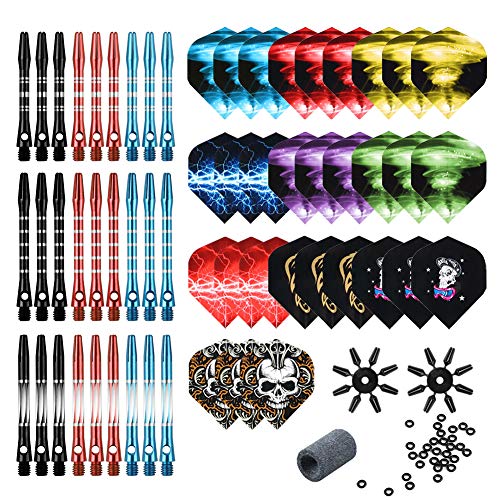
- 104 pieces of spares: aluminum shafts, flights, O-rings, flight savers, and a sharpener
- Thick PET flights hold their shape for a stable, consistent flight path
- Flight savers cut wear on your flights and fit every shape and material
How tight should everything be?
Finger-tight, always. Overtightening is the number-one cause of snapped tips and stripped threads.
Do new parts change how my darts fly?
They can — different shaft lengths and flight sizes shift balance and drag. Replace like with like unless you're deliberately experimenting.
Check all three darts before your next session, and swap anything bent, torn, or loose while it's still a ten-second fix.
Dart Tools: The Kit Serious Players Carry
Sharpening Darts: You're Doing It Backwards