
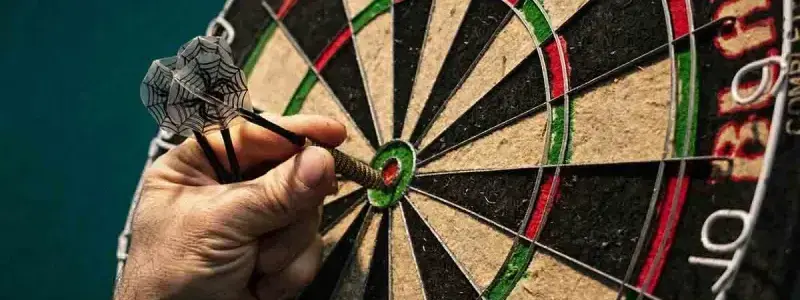
What's a Good Darts Average? The Hard Truth
Fifty-two point six, says the scoring app, and you stare at it like it's lying. Last week you told the whole team you averaged sixty.
Your three-dart average is the most honest number in darts, which is exactly why nobody's is as high as they claim. Here's what it measures, what counts as good, and how to move yours up.
What a Three-Dart Average Actually Is
It's the points you score per visit, averaged across a full game of 501: total points divided by darts thrown, times three. Finish 501 in 21 darts and you've averaged about 71.6.
It's calculated over whole legs, checkout darts included, which is why it's hard to fake. One hot visit barely moves it — only consistency does.
Darts Average Benchmarks by Level
- Under 40: beginner territory, and completely normal in your first months.
- 40 to 50: casual player who throws fairly often.
- 50 to 60: solid pub standard — you'll win more nights than you lose.
- 60 to 80: strong league player, competitive almost anywhere local.
- 80 to 95: county and top amateur level.
- 95-plus: professional territory, where PDC players routinely live in televised matches.
Context still matters. A 55 average with a strong doubles game beats a 65 that can't close, because averages don't win legs — checkouts do.
Find Your Real Number First
Most players guess high, sometimes wildly. Play ten legs of 501, record every visit, and let the math talk — the mechanics are in how scoring works in 501 darts.
Electronic boards and apps do the arithmetic for you, or a notebook works fine — tracking your darts stats covers both. Either way, ten legs is the minimum before the number means anything.
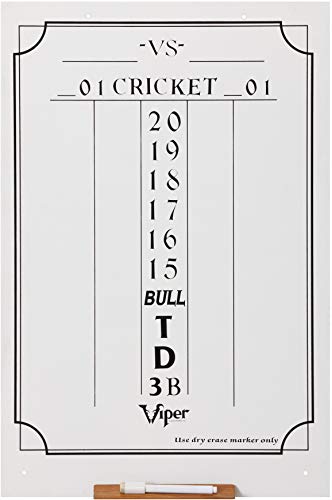
- Purpose-made layout tracks Cricket and 01 games at a glance
- Smooth surface works with any dry erase marker, and one comes included
- Mounting hardware is included for easy setup on a wall or cabinet door
How to Raise Your Average
Kill the disaster visits
The fastest gains come from eliminating catastrophes, not adding highlights. A visit of 26 hurts your average more than a 140 helps it.
Tighten your grouping until three darts in the 20 segment — sixty points — is your boring, repeatable floor. Trebles start arriving on their own once the singles are automatic.
Learn when to leave the 20
When your own darts block the treble 20 bed, switching to treble 19 protects the visit. Deliberate target choice is a scoring skill, not a cop-out — it's a big part of smart dart strategy.
Practice with a score attached
Throw 100 darts at treble 20, log the total, and retest every couple of weeks. Averages rise on measured practice, never on vibes.
Protect the finish
Legs that drag through six missed match darts crater your average. Give doubles ten dedicated minutes every session so your good scoring actually converts.
Quick Answers
Is a 60 average good?
Yes — a genuine 60 puts you above most casual players and makes you competitive in many local leagues. Genuine is the key word: measured across full legs, not remembered fondly.
Why is your practice average higher than your match average?
Pressure. Everyone sheds a few points when a leg matters, and that gap closes with match experience, not more solo practice.
Do first-9 averages matter?
They isolate pure scoring before checkout pressure kicks in, which makes them useful for diagnosis. The full-leg average is still the number that reflects how you actually play.
Track ten legs this week — you can't raise a number you don't know.