
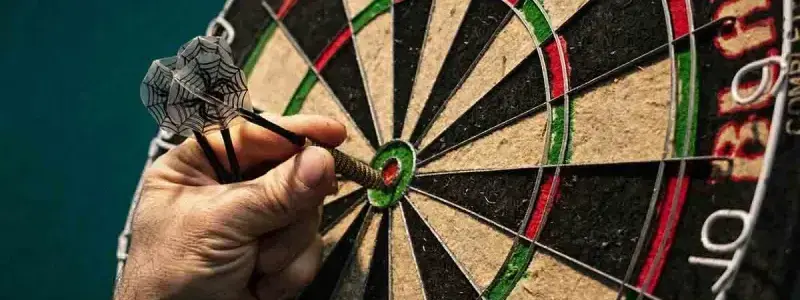
Cricket Strategy: Point or Close? Most Guess
Cut off, again. Your opponent just closed the 19s you'd been milking for points, and suddenly every dart in your hand needs a plan — cricket punishes aimless throwing faster than any other dart game.
The Quick Refresher
In cricket you race to close the numbers 20 through 15 plus the bull, where three marks closes a number and a treble counts as all three at once. Once you've closed a number your opponent hasn't, further hits there score you points.
You win by closing everything while holding at least as many points as your opponent. If the mechanics are fuzzy, start with our full guide to how to play cricket darts — this article is about the decisions.
The Core Tension: Pointing vs Closing
Every visit asks the same question: score points on a number you own, or close numbers and shut the game down? Pointing builds a cushion; closing removes your opponent's ability to build one.
The general rule fits in one line. Ahead on points, close; behind on points, either point or take away the number your opponent is pointing on.
The Decision Table
| Game state | Your play |
|---|---|
| Ahead on points | Close numbers and push to end the game |
| Behind on points | Point on a number you own |
| Opponent pointing freely on an open number | Close that number — cut them off |
| Behind on closes but you own a high number | Stack points as your equalizer |
| Bull still open late | Start it earlier than feels comfortable |
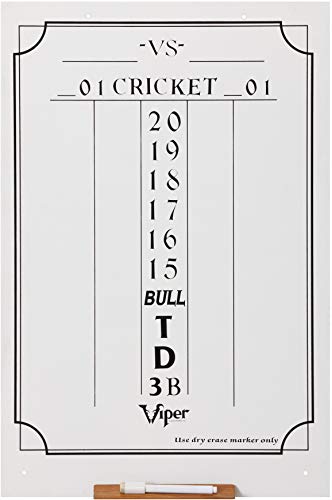
- Purpose-made layout tracks Cricket and 01 games at a glance
- Smooth surface works with any dry erase marker, and one comes included
- Mounting hardware is included for easy setup on a wall or cabinet door
When to Point
Point when you own a big number your opponent hasn't closed and you're even or behind on points. A lead of 50-plus changes how your opponent has to play, dragging them into catch-up mode.
- You closed the 20s first: two or three extra darts there buy a huge cushion
- Your opponent finishes strong: a points lead protects you in the endgame
- You're behind on closed numbers but own one high number: points are your equalizer
Don't over-point, though. Once your lead is bigger than your opponent can realistically erase on their best open number, every extra pointing dart is wasted tempo.
When to Close
Close when you're ahead on points, or when your opponent is scoring freely on an open number. Closing the number they're pointing on is defense and progress in the same three darts — the classic cut-off play.
- You lead on points: race to close and end the game
- Opponent owns a big number: closing it beats pointing anywhere else
- Late game with the bull open: start it early, since most players need several visits
Read the Game State Before Every Turn
Strong cricket players glance at three things before throwing: the point gap, who owns which numbers, and how many darts each side realistically needs to close out. That read decides whether tempo or cushion wins this particular game.
Here's a useful habit: if you can't say out loud why this visit is pointing or closing, you're guessing. The same discipline runs through all dart strategies — intent beats instinct.
Timing the Bull
The bull is the hardest number to close, so weak bull shooters should start it earlier than feels comfortable. Saving it for last against a good bull shooter is how winnable games slip away.
If you're strong on the bull, flip it into a weapon. Closing it early and dropping 25s while your opponent grinds trebles is brutal to play against.
Common Cricket Mistakes
- Pointing far past the lead you actually need
- Ignoring the number your opponent keeps scoring on
- Saving the bull for the end regardless of your bull skill
- Chasing trebles when plain singles would close the number this visit
Cricket Strategy FAQ
Should I always open on the 20s?
It's the standard opening because 20s are the most valuable points, rewarding the same treble-20 accuracy as x01 games. But if your opponent closes the 20s first, pivot immediately rather than feeding them marks.
Is cricket more popular than 501?
They're the two giants, and which one rules depends on where you play — cricket owns many American bars. Our look at the most popular dart games has the full picture.
Before your next game, pick the point gap you want as your rule — then let that number make your decisions for you.
Cricket Darts: The Rules, Minus the Arguing

Mickey Mouse Darts: Cricket's Wilder Cousin