
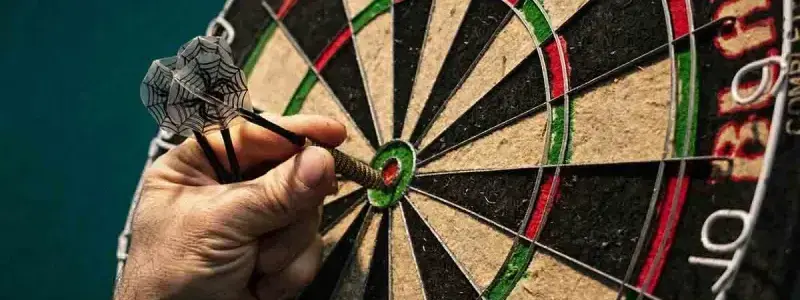
The 10-Minute Warm-Up Pros Swear By
Three darts into league night, nothing's landed within an inch of a treble, and your arm feels like it's still out in the car park. That cold-start wobble isn't a form collapse — it's the ten minutes of warm-up you skipped.
Why a Warm-Up Wins You the First Leg
A dart throw is a fine motor skill, and fine motor skills misfire when the muscles are cold and the timing's rusty. Most players need somewhere between 15 and 30 throws before the release feels normal again.
Start a match before that point and you're donating the opening leg. A warm-up doesn't remove those rough throws — it just moves them to before the game counts.

- Protects your floor from bounce-outs and dropped darts around the board
- Embossed steel tip and soft tip throw lines mean no taped or glued-down floor markings
- Heavy-duty padded foam rolls up for quick storage between games
The 10-Minute Routine at a Glance
| Step | Time | What you're doing |
|---|---|---|
| 1. Loosen the body | 2–3 min | Arm circles, wrist rolls, shoulder shrugs |
| 2. Easy throwing | 3–4 min | No-target darts, then fat singles and bull |
| 3. Targeted practice | 5–8 min | Around the clock, doubles, treble 20 |
| 4. Settle the head | 1 min | Slow breaths and a game plan |
Step 1: Loosen the Body (2–3 Minutes)
You're not lifting weights, so keep it light and quick. The only goal is blood flow through the shoulder, elbow, and wrist.
- Slow arm circles, ten forward and ten back
- Gentle wrist rolls and finger stretches
- A few shoulder shrugs and neck tilts
- Shake the throwing hand out until it hangs loose
Step 2: Easy Throwing (3–4 Minutes)
Throw your first darts at the board with no target at all. Think only about a smooth release and a full follow-through — the same fundamentals from our guide to accurate throwing.
Then aim big: fat single 20, fat single 19, the bull area. You're calibrating a sightline, not chasing trebles yet.
Step 3: Targeted Practice (5–8 Minutes)
Now mirror real match situations. A fast lap of around the clock is ideal because it drags your aim to every part of the board.
Follow it with doubles, because doubles win legs. Throw three darts each at double 20, double 16, and double 8, then finish on whichever double you actually use in matches.
- Around the clock, singles only, at pace
- Three darts at each go-to double — borrow ideas from these doubles practice drills
- Six darts at treble 20 to leave on a scoring rhythm
Got a partner waiting? A quick game of halve-it warms you up brilliantly too, because it punishes misses and snaps your focus on fast.
Step 4: Settle the Head (1 Minute)
Take a few slow breaths and pick your game plan before leg one. Deciding your preferred double and setup routes now means fewer decisions under pressure later.
Don't rehearse doubt, either. A scratchy warm-up and match form are different animals.
Warm-Up Mistakes That Cost Legs
- Skipping it entirely and treating leg one as the warm-up
- Throwing only at treble 20, then facing your first double stone cold
- Grinding for 30+ minutes and leaving your focus at the practice board
- Sinking two pints "to relax" before the first real dart goes in
Warm-Up FAQ
How close to the match should I finish warming up?
As close as you can — ideally your first match dart flies within 10 minutes of your last practice one. Any longer and the arm starts cooling off again.
Do professionals bother warming up?
They throw on a practice board right up until they walk on stage. If it matters at their level, it matters at yours.
Ten minutes on the practice board buys the first leg — cheapest win in darts.
Count-Up: The Perfect Warm-Up (Don't Skip It)
Practice Routines That Actually Move Averages