
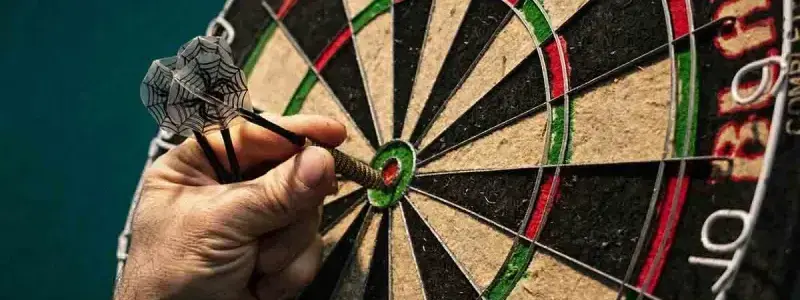
Practice Routines That Actually Move Averages
Forty minutes in, the treble 20 looks like a hedgehog and your throwing arm's gone heavy. You've thrown two hundred darts tonight, and you can't name a single thing that got better.
Throwing darts and practicing darts aren't the same activity. A routine gives every session a target, a score, and a verdict you can't argue with.
Why Aimless Throwing Fails
Unstructured throwing grooves whatever you already do — flaws included. There's no pressure on any single dart, and pressure is the one thing match play guarantees.
Routines that work share three traits: they're scored, they're repeatable, and they end. Thirty focused minutes beats two foggy hours every time.
The 30-Minute Baseline Session
This is a complete session for most improving players. Run it three or four times a week and log the numbers.
- Warm-up (5 minutes): throw at the bull with no scoring, just to find your rhythm.
- Scoring block (10 minutes): throw 10 visits at treble 20 and count the total points.
- Doubles block (10 minutes): work from double 20 down to double 16, three darts at each.
- Finish drill (5 minutes): set a two-dart out like 32 and complete it three times before you stop.
That last rule is the whole trick. Ending on a completed finish trains you to close under mild pressure instead of walking away on a miss.
Scoring Routines
The 100-dart challenge
Throw 100 darts at treble 20 and record the total. It's a brutally honest benchmark — retest every couple of weeks and watch the number climb.
Around the trebles
Hit treble 20, treble 19, then treble 18, moving on only when each one lands. It builds the switch-hitting you'll need when the 20 bed gets crowded in a real leg.
Doubles Routines
Doubles win legs, and they're what most players practice least. Give them at least equal time with scoring — these doubles practice drills can fill the block.
121 in six
Start on 121 and try to take it out in six darts or fewer. Reset when you fail, and drop to 101 if six darts is out of reach right now.
Double-in ladder
Start at double 1 and climb toward double 20, advancing only when a double lands. Track how far you get in ten minutes, then beat it next session.
Build Your Practice Week
You don't need a new routine every day — you need the same blocks in a smarter order. Rotate the emphasis so nothing gets stale and nothing gets skipped.
- Two baseline days: the full 30-minute session, exactly as written.
- One doubles-heavy day: double the doubles block and halve the scoring block.
- One game day: swap a block for a solo game to add variety and pressure.
Rest days count as training too. Muscle memory consolidates between sessions, not during them.
Keep Score or It Didn't Happen
Write down your 100-dart total, your doubles hit rate, and your best finish after every session. A notebook or phone note is enough — what matters is a trendline, and tracking your darts stats shows you how to build one.
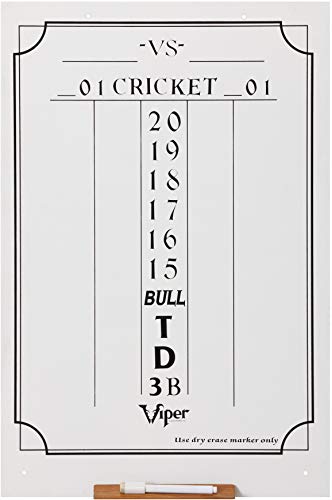
- Purpose-made layout tracks Cricket and 01 games at a glance
- Smooth surface works with any dry erase marker, and one comes included
- Mounting hardware is included for easy setup on a wall or cabinet door
The numbers also pick your next drill for you. If scoring is climbing while your doubles percentage sits flat, your next three sessions just planned themselves.
Practice Mistakes to Avoid
- Only ever throwing at the 20 and calling it a session.
- Quitting on a miss instead of a completed finish.
- Marathon sessions that groove a tired, sloppy throw.
- Never writing anything down, so "better" stays a feeling instead of a fact.
Quick Answers
How often should you practice?
Short and frequent beats long and rare. Four 30-minute sessions a week outperform one four-hour weekend grind, because muscle memory builds on repetition and rest.
Should you practice on a bad throwing day?
Yes, but shrink the goal. Aim at a bigger target, rebuild your rhythm, and still end on a completed finish.
What if the routine gets boring?
Boredom usually means the drill's too easy, so tighten the target before you quit. Or swap a block for one of these solo darts practice games, which add pressure without a partner.
Run the 30-minute baseline tonight and write down every number it produces.