
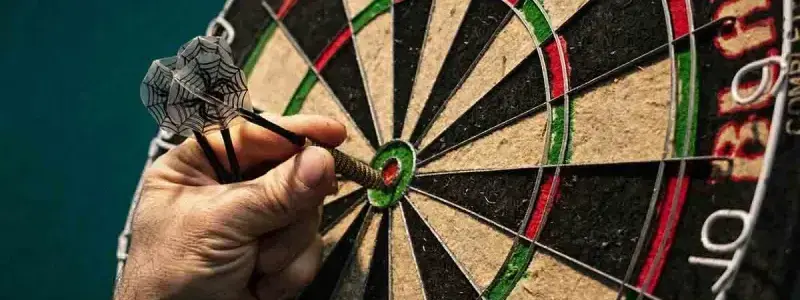
Tic-Tac-Toe Darts: Childhood Game, Real Skill
Nine squares chalked beside the board, and the bullseye owns the middle one. Anyone who wants the center of this grid has to take the hardest shot in darts to claim it.
Tic-tac-toe darts plays exactly like the pencil-and-paper classic, except you claim squares by hitting targets on the dartboard. It's a two-sided fight of claiming and blocking that rewards accuracy on demand.
What You Need
A standard dartboard, three darts per side, and a chalkboard or whiteboard for the grid. Two players or two teams — the game is built for exactly two sides.
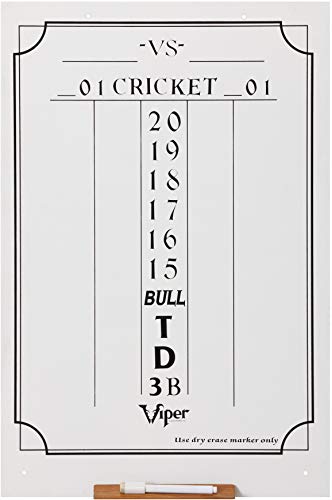
- Purpose-made layout tracks Cricket and 01 games at a glance
- Smooth surface works with any dry erase marker, and one comes included
- Mounting hardware is included for easy setup on a wall or cabinet door
Setting Up the Grid
Draw a 3x3 grid next to your scoreboard. Assign a dartboard target to each square — the center square is traditionally the bullseye, and the other eight get numbers the players agree on.
A common spread mixes easy and hard targets: 20, 19, 18, 17, 16, 15, 14, and 12 around the bull. Write each target inside its square so nobody argues mid-game.
The Rules
Players or teams alternate turns of three darts. To claim a square in the standard game, you close its target cricket-style — three marks.
Singles count one mark, doubles two, trebles three, exactly as in cricket darts. Land the third mark and you chalk your X or O in that square — it's yours for good.
First side to line up three claimed squares — across, down, or diagonal — wins. If all nine squares get claimed without a line, it's a draw, same as the paper game.
The Quick Version
For faster games, one hit claims a square outright. It suits beginners and crowded boards, but the three-mark version is the real strategic game.
A Turn in Action
Say the top-left square is 20 and you're sitting on two marks there. Dart one finds a single 20 — third mark, square claimed, your X goes up.
That leaves two darts to spend. Start marks on the center bull, or drop them on whichever square blocks your opponent's best line.
Strategy
Fight for the Center
The bullseye square touches four winning lines, more than any other square on the grid. It's the hardest target on the board, which is exactly why the game parks it in the middle.
If your bull is shaky, the fundamentals in how to accurately throw darts pay off here more than anywhere.
Block Before You Build
An opponent holding two squares in a line demands an answer, same as paper tic-tac-toe. Count their marks — if they're one dart from closing the third square in a line, your turn belongs on that square.
Spread Your Early Marks
Partial marks across two or three squares give you options later. Dumping nine straight darts into one stubborn square hands your opponent the rest of the grid.
The mark-counting instinct from cricket strategy transfers straight over. Always know what's open, what's claimed, and what's one dart from turning.
Common Mistakes
- Forgetting the draw exists — sometimes the right play kills a line instead of chasing your own.
- Assigning nothing but hard targets, which turns the game into a slog.
- Losing track of marks — chalk every mark the moment a turn ends.
Can More Than Two Play?
Pairs work great: teammates alternate turns and share a symbol. Three or more sides breaks the tic-tac-toe logic, so stick to two teams.
Targets for Beginners
Use fat, friendly numbers and drop the three-mark rule. Big singles keep turns moving, the grid filling, and new players throwing instead of waiting.
Chalk the grid, guard the bull, and never leave two enemy squares sharing a line unanswered.
Darts for Kids: Safe Setup Parents Get Wrong
Darts Games for Groups: End the 501 Boredom