
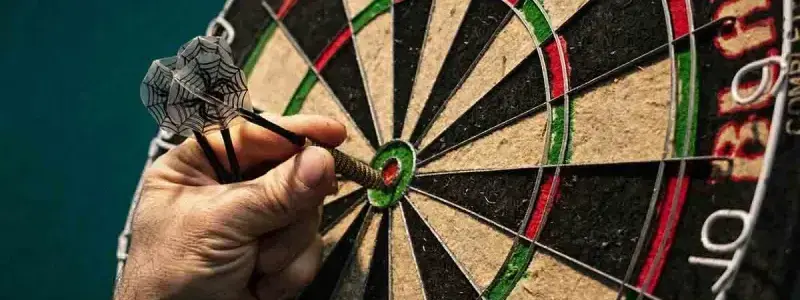
6 Solo Games That Beat Boring Practice
Ninety-five is the number chalked beside the board — last night's Halve-It total, daring you to beat it. The room's empty, but suddenly every dart matters.
Practicing alone usually fails because nothing's at stake. Solo games fix that by giving you a score to beat, so every visit has consequences.
Match the Game to Your Weakness
Don't pick a game at random — pick the one that attacks your softest spot. Ten minutes of the right game beats an hour of the wrong one.
- Spraying darts across the board: Around the Clock.
- Falling apart under pressure: Halve-It.
- Weak scoring: 100-dart scoring.
- Missed doubles: Doubles Round the Board.
- No match sharpness: 501 against a ghost.
Around the Clock
Still the best all-purpose solo game. Hit 1 through 20 in order, moving on only when the current number lands.
It drags your aim across the whole board instead of letting you camp on the 20. The full rules live in our guide to around the clock darts.
- Beginner: any part of the number counts.
- Intermediate: count the darts a full lap takes, then beat it next time.
- Advanced: doubles only, bull to finish.
Halve-It
Pick a target sequence — say 20, 19, double 18, treble 17, bull — and score whatever you land on each one. Miss a target with all three darts and your running total gets chopped in half.
That halving rule manufactures real pressure out of thin air. See how to play halve-it for a full sequence to run.
100-Dart Scoring
Throw 100 darts at treble 20 and add up the total. There's no luck to hide behind, which makes it a perfect progress tracker — log the number and retest every week or two.
Camping on the 20 forever will stall you, though. Alternate sessions between treble 20 and treble 19 so your switch shot stays honest.
Shanghai Solo
Throw three darts at each number from 1 through 7 — or push on to 20 — scoring only on the target number. Land a single, double, and treble of the same number in one visit, a "Shanghai," and that's the jackpot.
It rewards precision on numbers you'd otherwise never visit. Your seven-round total becomes tomorrow's score to beat.
Doubles Round the Board
Start on double 1 and work up to double 20, then finish on the bull. Count every dart for the full lap — under 60 is solid club level, and pros clear it startlingly fast.
Legs are won on doubles, which makes this the highest-value game on the list. If it feels grim for the first few laps, that's the point.
501 Against a Ghost
Play a normal 501 leg, but hand your invisible opponent a fixed score — say 60 points per visit. You have to outscore the ghost and still take out your double to win.
Raise the ghost's average as you improve. It's the closest thing to match pressure you can build alone.
Turn Games Into a Program
One game played every night goes stale, while a rotation keeps every skill warm. Slot two or three of these into a weekly plan like the ones in these darts practice routines.
Whatever you play, write the score down. A number you recorded is a number you'll try to beat.
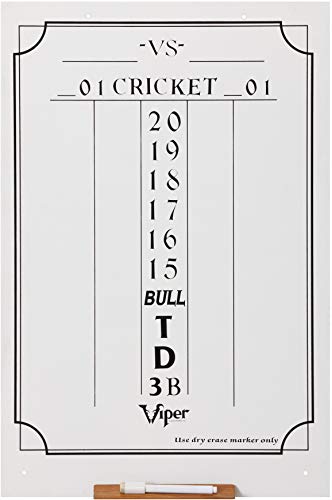
- Purpose-made layout tracks Cricket and 01 games at a glance
- Smooth surface works with any dry erase marker, and one comes included
- Mounting hardware is included for easy setup on a wall or cabinet door
Quick Answers
How long should a solo session run?
Thirty to forty-five minutes of scored games beats hours of casual throwing. Stop while your throw still feels good instead of grinding into fatigue.
Which game should beginners start with?
Around the Clock, singles only. It teaches aim across the whole board with no scoring math in the way.
Chalk tonight's score next to the board and let it stare at you until tomorrow.
Practice Routines That Actually Move Averages
Count-Up: The Perfect Warm-Up (Don't Skip It)