
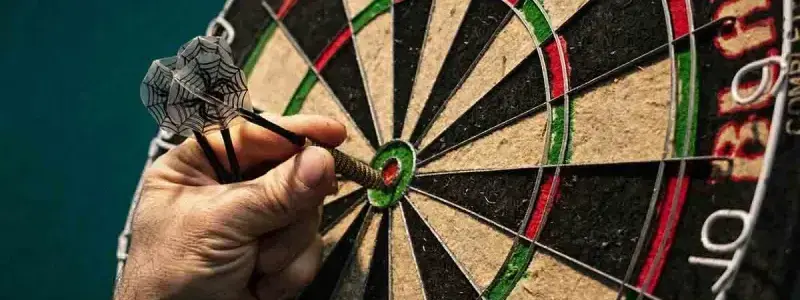
Best Home Dartboards: Don't Buy the Wrong One
Friday night, the basement is finally finished, and the last bare patch of wall is waiting on a dartboard worth aiming at. Choose well and it'll take darts cleanly for years — choose badly and it'll be pitted and spitting darts back by spring.
Picking a home board comes down to one big decision and a handful of details. Here's the whole path, from board type to what goes on the wall around it.
Start With the Board Type
The first decision is bristle or electronic, and it shapes everything else you buy. Bristle boards made of sisal fiber take steel-tip darts and self-heal as the fibers close around each hole.
Electronic boards take soft-tip darts, score automatically, and are far friendlier to walls, kids, and pets. If you're torn, our bristle vs cork vs electronic comparison walks through the trade-offs in detail.
When Bristle Is the Right Call
Choose bristle if you want the authentic pub-and-tournament feel or plan to play in a steel-tip league. Sisal boards are quiet, need no batteries, and reward accuracy with a solid, satisfying landing.
They do demand more from your setup, though. You'll keep score yourself and protect the wall behind the board.
When Electronic Wins
Choose electronic if convenience beats tradition. Automatic scoring removes the math, and most units include dozens of built-in games with handicap options for mixed skill levels.
They're also the safer pick for households with kids, since soft-tip darts are lighter and blunter. Our guide to electronic dartboards covers which features are worth paying for.
What Separates a Good Bristle Board From a Cheap One
Quality sisal is the whole game. Dense, tightly packed fiber grips darts firmly and heals cleanly, while cheap boards use loose fiber or wound paper that pits and craters within months.
Look at the wiring next. Thin, blade-style wires angled away from the face deflect fewer darts than the fat round wires on budget boards, which means fewer bounce-outs.
Accudart's bristle boards are a familiar example of both done right — dense sisal behind thin wire is why an Accudart board stays playable for years.
A movable number ring matters more than people think. Rotating it regularly spreads wear away from the twenty and can double the life of the board.
Plan the Full Setup, Not Just the Board
A dartboard is only half the purchase — the space around it needs attention too. Every player misses, and drywall doesn't self-heal like sisal does.
Budget for these alongside the board:
- A surround or backboard to catch stray darts — see our guide to dart backboards
- A cabinet if you want the board covered and the room tidy between sessions
- Proper lighting so the board is shadow-free from the throw line
- A mat or marked throw line at the regulation distance
Hang the board with the bullseye at 5 feet 8 inches from the floor. Steel-tip players throw from 7 feet 9.25 inches; soft-tip players from 8 feet.

- Surround catches stray darts before they can mark the wall behind the board
- Includes a regulation sisal bristle steel tip dartboard so you're ready to play
- High-density backboard also spares dart points from hard wall strikes
Common Buying Mistakes
The biggest mistake is buying the cheapest bristle board on the page. A pitted, bounce-out-prone board makes practice frustrating, and most people blame themselves before the equipment.
The second is ignoring the room. A board in a cramped hallway with bad light and bare drywall behind it won't get used, no matter how good it is.
The third is mismatching darts and board. Steel tips destroy an electronic board's segments, and soft tips won't stick reliably in sisal.
Which Board Fits Your Home?
| Your situation | Best pick |
|---|---|
| Casual family play | Mid-range electronic board with soft-tip darts |
| Serious practice or league prep | Quality sisal board with thin wiring |
| Small shared space | Cabinet-mounted bristle board that closes up after games |
| Renters worried about walls | Electronic board with a large surround |
Do bristle dartboards wear out?
Yes, but slowly if you rotate the number ring and keep the board dry. Never soak a sisal board — moisture ruins the fibers.
Can I use one set of darts on both board types?
Some darts accept interchangeable steel and soft tips, but most players keep a separate set for each. Electronic boards also usually cap soft-tip darts at lighter weights.
Measure your wall, pick your board type, and order the surround in the same cart — your drywall will thank you.