
Rotate Your Board or Kill It: The Schedule
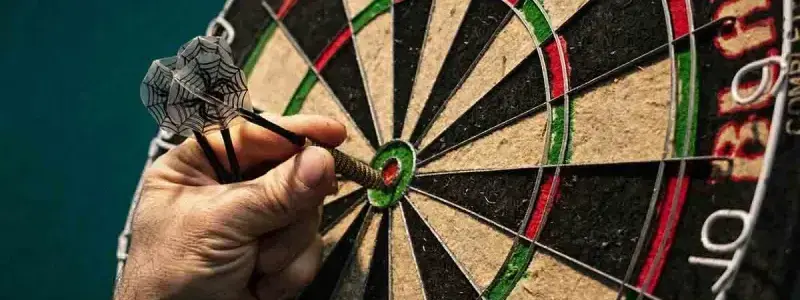
Fifty of the sixty darts you'll throw tonight are chasing the same three-inch strip of sisal under the twenty. Six months of that and the bed turns to fluff while the bottom of the board stays showroom-crisp.
Rotating a bristle dartboard spreads that damage around the face instead of letting a few beds absorb everything. It's the cheapest way to double a board's useful life.
Why Rotation Works
Nearly every game funnels darts at the same spots — the twenty for scoring, the nineteen as backup, the bull to finish. Left alone, those beds soften, fray, and start rejecting darts while the rest of the board stays fresh.
The number ring on most boards is a separate metal circle held by a spring clip. Because the numbers detach, you can turn the board itself and move lightly used sisal into the firing line.
How Often to Rotate: A Simple Schedule
There's no official interval, so match the schedule to how much you play.
| How much you play | Rotate the board |
|---|---|
| Daily practice | Every week or two |
| A few sessions a week | Every two to four weeks |
| Occasional casual games | Every couple of months |
The real signal is visible wear. If the bed under the twenty looks noticeably fuzzier than its neighbors, you've waited a touch too long — rotate now and shorten the interval.
How to Rotate Correctly
Take the board off the wall and unclip the number ring. Turn the board one or two segments in either direction, then refit the ring with the twenty back at the top.
One rule matters: only rotate to segments of matching color. The face alternates black and cream beds, so turning an odd number of segments puts the wrong colors under the wrong numbers.
That means rotating in steps of two segments. Over many rotations, every same-colored bed takes a turn under the twenty.
The bull is the one spot rotation can't protect, since it sits at the center of every turn. Bull wear is one reason boards eventually retire no matter how carefully you rotate.
What Rotation Can't Fix
Rotation spreads wear; it doesn't undo it. Once fibers are torn out, bounce-outs climb, and no amount of turning brings the density back — that's when to check whether your dartboard needs replacing.
Rotation also only applies to bristle boards. Electronic boards have fixed wiring behind each segment, so they can't be turned.
And rotation is only half the job. Sharp points, dry air, and careful dart removal do the rest — the full routine is in our dartboard maintenance guide.
Does rotating mess up the number layout?
No — the numbers live on the removable ring, and the ring always goes back with twenty at the top. The famous layout, explained in why a dartboard is numbered the way it is, never changes.
My number ring doesn't come off. Can I still rotate?
Some budget boards print the numbers directly on the face, and those can't be rotated. If you're buying new, a detachable ring is worth insisting on.

- Tournament-spec construction delivers consistent, match-ready performance for players of all skill levels
- Self-healing sisal and a repositionable number ring help extend the board's playing life
- Ultra-thin wiring reduces bounce-outs so more darts land cleanly in the scoring area
Should I rotate a brand-new board?
Start rotating in the first weeks of use rather than waiting for damage. Even wear from day one beats rescuing a half-worn board later.
Do pubs and clubs rotate their boards?
Well-run venues rotate constantly because their boards take thousands of darts a week. If a pub board still plays well after months of abuse, rotation is usually why.
Next time you pull your darts, glance at the twenty bed — if it's fuzzier than the rest, tonight's the night to turn the board.