
Bristle, Cork, or Electronic? One's a Trap
The bargain board looked identical to the pricey one on the shelf above it, so it went in the cart. Six weeks later its twenty bed is crumbling, and every third dart clatters to the floor.
Dartboards come in three common builds: bristle (sisal), cork or paper-wound, and electronic. They look similar from across the room and play nothing alike.
The Three Builds at a Glance
| Bristle (sisal) | Cork / paper-wound | Electronic | |
|---|---|---|---|
| Darts used | Steel-tip | Steel-tip | Soft-tip (plastic) |
| Durability | Years — fibers self-heal | Weeks of regular play | Segments and sensors wear out |
| Scoring | Manual | Manual | Automatic |
| Needs power | No | No | Yes — outlet or batteries |
| Best for | Serious steel-tip play | Rare, throwaway use | Parties, families, beginners |
Bristle (Sisal) Dartboards
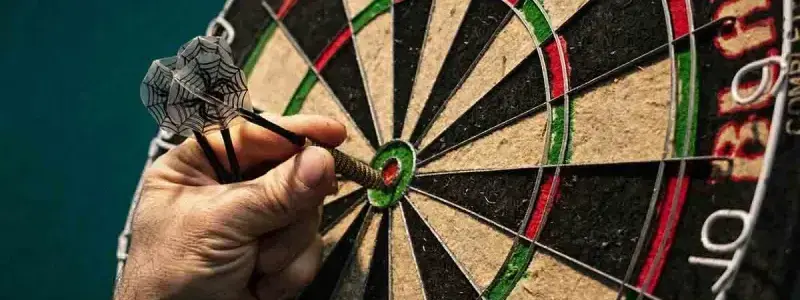
Bristle boards are the standard for serious steel-tip play. Despite the name, there's no boar bristle involved — the face is millions of compressed sisal plant fibers packed end-on.
That construction is why they last. A steel point slides between fibers instead of cutting them, and the fibers close back over the hole when the dart comes out.
Bristle is what tournament darts is played on. If you want to practice the real game with steel-tip darts, this is the board to buy.

- Tournament-spec construction delivers consistent, match-ready performance for players of all skill levels
- Self-healing sisal and a repositionable number ring help extend the board's playing life
- Ultra-thin wiring reduces bounce-outs so more darts land cleanly in the scoring area
The costs are real but manageable. Quality sisal costs more than cork, and you keep score the old way — chalk and arithmetic.
Cork and Paper-Wound Dartboards
The cheap boards in toy aisles and game bundles are usually cork, or coiled paper dressed up to look like bristle. They're fine for a few casual games and not much more.
Their weakness is permanence. Every dart hole in cork or paper stays a hole, so the popular beds crumble within weeks of regular play.
Bounce-outs climb fast as the surface breaks down. A cheap board can genuinely make you think you've gotten worse at darts.
They have a place: occasional family use, kids learning the motion, or a beater board for the garage. Just don't judge the game — or your throw — by one.
Electronic Dartboards
Electronic boards swap sisal for a plastic face full of small holes, with sensors underneath registering every hit. You throw plastic-tipped soft-tip darts at them instead of steel.
Their killer feature is automatic scoring. The board tracks every throw, handles multiple players, and many models offer dozens of built-in games.
That convenience suits parties, families, and beginners who'd rather play than do subtraction. The full case for them is laid out in electronic dartboards.
The trade-offs: they need power, the plastic segments and sensors wear out, and steel tips are strictly forbidden. Soft-tip play also feels different — lighter darts, plus the occasional stuck-tip or missed-sensor argument.
Which Should You Buy?
Match the board to how you'll actually play. Serious or league-minded steel-tip play means bristle, no debate.
Casual fun, kids, parties, or anyone allergic to subtraction points to electronic. Cork or paper only makes sense for rare, throwaway use on a tight budget — with expectations set low.
Think about your room, too. Steel-tip setups want a backboard for misses, while electronic boards want an outlet or batteries within reach.
When you're ready to buy, our picks for the best dartboards for home narrow the field.
Can I use steel-tip darts on an electronic board?
No — steel points destroy the plastic segments and can wreck the sensors. Electronic boards are soft-tip only unless the maker explicitly says otherwise.
Is cork ever the right choice?
Only when price beats everything else and play will be light. The moment darts becomes a habit, a cork board becomes the bottleneck.
Do bristle boards work with soft-tip darts?
Poorly — plastic tips don't penetrate sisal well, so they bounce out or break. Match the darts to the board, always.
Decide how you'll play most nights, and let that answer — not the price tag — pick the board.
Best Home Dartboards: Don't Buy the Wrong One
What's Inside a Dartboard Will Surprise You