
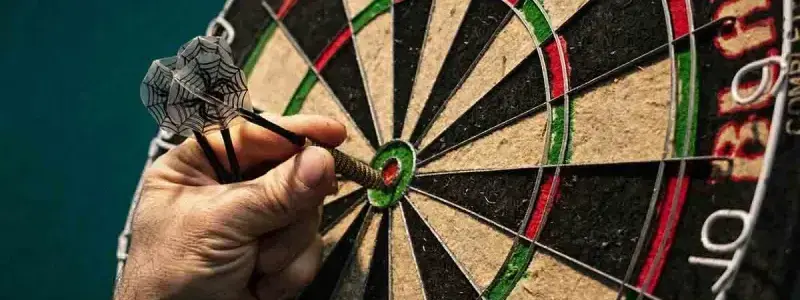
What's Inside a Dartboard Will Surprise You
Thousands of holes a season, and a good board closes nearly every one behind the dart. The material pulling off that trick is sisal — rope fiber packed end-on and compressed until it can catch steel.
Modern quality dartboards are made of compressed sisal fiber, a natural plant material better known for rope. Here's what's actually inside a board, and why the material matters when you buy one.
Board Anatomy at a Glance
| Part | What it's made of |
|---|---|
| Face | Compressed sisal fiber "biscuits" |
| Spider (segment wires) | Steel — thin and embedded on quality boards |
| Number ring | Detachable metal |
| Backing | Wood or composite board |
| Colors | Paint on the sisal face |
Sisal: The Heart of the Board
Sisal comes from the agave sisalana plant, whose long leaves yield tough, stiff fibers. The same toughness that made sisal the classic rope and twine fiber makes it ideal for absorbing dart impacts.
To build a board, manufacturers bundle the fibers into small rolls called biscuits. Thousands of biscuits get packed together, compressed into a disc, and glued to a backing board.
The fibers end up pointing straight at you. When a dart arrives, the point slides between fibers and wedges — the board grips the dart instead of being punctured by it.
Why "Self-Healing" Isn't Marketing Fluff
Because the point parts fibers rather than cutting them, they spring back and close over the hole when you pull the dart. Over thousands of throws, that recovery is what separates sisal from every cheap alternative.
Density decides quality. Tightly packed sisal grips better, heals better, and lasts years — which is why denser boards cost more, as the buying notes in steel-tip dartboards explain.
The Rest of the Board
The spider — the wire web marking doubles, trebles, and segments — is metal, usually steel. Older boards used thick round wire stapled on, while better modern boards embed thin, staple-free wire edge-on to cut bounce-outs.

- Built to official tournament specifications for serious practice and match play
- Dual-density core improves dart retention and keeps the board playing consistently
- Ultra-thin wiring increases the scoring area and cuts down on bounce-outs
The numbers ride on a detachable metal ring, which is what lets you rotate the board to spread wear. The backing is typically wood or composite, and the colors are just paint on the sisal face.
What Boards Used to Be Made Of
Before sisal took over in the twentieth century, boards were commonly solid wood — often elm — soaked overnight to keep the surface from drying and cracking. Clay boards had a run as well.
Sisal ended the soaking ritual. A fiber board needs no water at all — in fact moisture ruins it, which matters before you hang one in a damp garage.
Materials in Other Board Types
Not every dartboard is sisal, and material is the real difference between categories:
- Cork and coiled-paper boards: cheap, hole-permanent, short-lived
- Plastic electronic boards: molded segments over sensors, soft-tip only
- Magnetic and velcro boards: kid-safe toys, not really darts
How those builds stack up head-to-head is covered in bristle vs cork vs electronic dartboards.
Is any animal bristle used in dartboards?
No — "bristle board" is a naming leftover, and no quality board uses boar or horse hair. It's plant fiber through and through.
Where does the sisal come from?
Sisal is farmed in warm climates, with East Africa and Brazil among the major producers. Board makers grade and select fiber for density and consistency.
Does sisal work for soft-tip darts?
Not well — plastic tips struggle to wedge between the fibers and often bounce out or snap. Soft tips belong on the plastic-segment boards described in electronic dartboards.
How can I judge sisal quality in a shop?
Look at the face edge-on: fine, tight, even fiber packing is the good sign, and staple-free thin wiring usually rides along with it. Weight is a hint too — dense boards feel heavy for their size.
Next time you pull a dart and watch the hole vanish, you'll know it's a rope plant doing the work.
Bristle, Cork, or Electronic? One's a Trap
Dartboard Dying? Habits That Double Its Life