
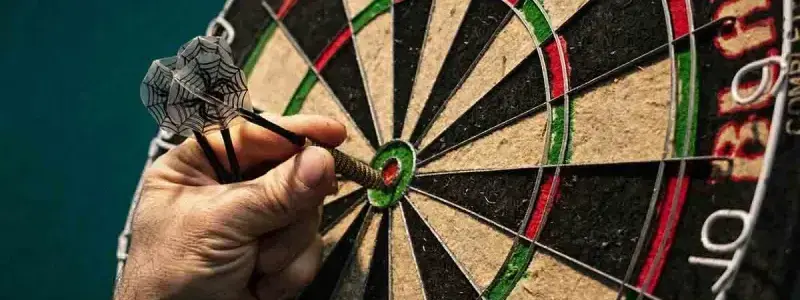
Dartboard Dying? Habits That Double Its Life
Halfway through a house match, a guest rips his darts out sideways — and a few sisal fibers come out with them. A month of that treatment and your twenty bed looks chewed while the rest of the board stays factory-fresh.
A quality bristle board can take years of darts, but only if you build a few small habits. None of them takes more than a couple of minutes.
Rotate the Board Every Few Weeks
Sisal boards die from concentrated wear, and almost all of it lands in and around the twenty. Rotating the board spreads that punishment across the whole face.
Most boards have a movable number ring held on by a clip. Pop it off, turn the board so a fresh segment sits at the top, and refit the ring with the twenty back at twelve o'clock.
Rotate only to matching-colored segments so the board's pattern still lines up with the ring. Every few weeks of regular play is the right pace — here's how often to rotate your dartboard in detail.
Keep Your Dart Points in Shape
Blunt or hooked points are board killers. A rounded tip shoves sisal fibers apart and tears them on the way out, while a sharp, slightly rounded point slides between them cleanly.
Check your points every few sessions and smooth off burrs with a dart stone. Sharpening your dart points takes two minutes and dramatically slows board wear.

- Keeps steel tips sharp so darts bite the board instead of bouncing out
- Five sharpeners cover your dart case, game room, and travel bag
- Small and light enough to carry to league night or the bar
Never Let the Board Get Wet
Sisal is compressed plant fiber, and water makes it swell, bubble, and rot. A soaked board is usually a dead board.
Forget the old myth about soaking boards to help them "self-heal." If the face gets dusty, a light brush or a vacuum pass is all it needs — never a damp cloth.
Watch Where You Hang It
Humidity and direct sunlight both shorten a board's life. Sun bleaches the colors and dries the fibers brittle, while damp air swells them.
A dry indoor wall away from windows and radiators is ideal. Garages and sheds only work if they stay dry year-round, and a dartboard cabinet adds a useful layer of protection either way.
A cabinet or backboard also saves your wall. Bounce-outs and wild darts will happen, and drywall doesn't self-heal.
Pull Darts Straight Out
Yanking darts sideways tears fibers out of the face. Grip the barrel, give a slight twist, and pull straight back along the dart's own line.
Teach guests the same habit before the first leg. One careless night can do a month's worth of damage.
Let the Sisal Recover
Sisal "self-heals" as displaced fibers slowly close back over old holes. Resting heavily used beds — which rotation does automatically — lets that recovery keep pace with the damage.
If one bed is getting hammered in practice, vary the routine. Working around the whole board is better for your scoring anyway.
Your Maintenance Schedule at a Glance
| Task | How often |
|---|---|
| Rotate the board | Every few weeks |
| Check and stone dart points | Every few sessions |
| Brush or vacuum dust off the face | Whenever it looks dusty |
| Check for damp, sun exposure, and wall damage | Each time you rotate |
How Long Should a Bristle Board Last?
With casual home play and these habits, several years is realistic. Heavy daily practice wears any board faster, no matter how well you treat it.
Electronic boards play by different rules — clean segment holes and intact tips matter more than rotation, though they should stay just as dry. Either way, once the sisal stops gripping darts, it's time to consider replacing the board.
Rotate it this week, stone your points, and the board you own now will still be taking darts cleanly next year.
Rotate Your Board or Kill It: The Schedule
5 Signs Your Dartboard Is Already Dead