
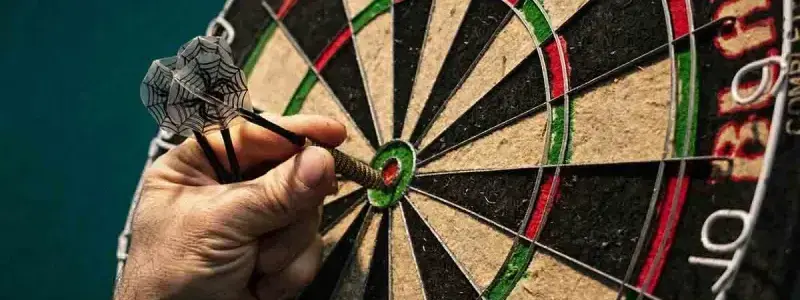
5 Signs Your Dartboard Is Already Dead
Another flush hit on the treble twenty, another dart clattering to the floor. When good throws stop sticking, the board — not your arm — is usually what's worn out.
Bristle boards fade gradually, so it's easy to keep playing on one long past its best. Here are the signs that mean replace it — and the ones you can still fix.
Five Signs Your Board Is Done
1. Constant bounce-outs in the popular beds
Fresh sisal grips a sharp point almost every time. When darts keep falling out of the twenty, nineteen, and bull even with well-kept points, the fiber density in those beds is gone.
Test it against a quiet part of the board. If darts stick fine in the threes but not the twenty, the board is worn — not your darts.
2. Bald or cratered patches
Look closely at the heavy-traffic beds. Pits, craters, or spots with fibers missing entirely mean that sisal isn't coming back.
A fuzzy surface alone is normal wear. Actual holes and low spots mean the self-healing has fallen behind for good.
3. Bulging, bubbling, or soft spots
Moisture damage makes sisal swell away from the backing in raised bubbles. A board that's bulging, delaminating, or spongy to the touch is finished, whatever its age.
4. Colors too faded to score
Sunlight and time bleach the red, green, black, and cream until segments blur together. If you're squinting from the throw line to tell doubles from singles, scoring stops being fair.
5. A damaged spider
The spider — the metal wire web dividing the segments — can bend, lift, or break loose after years of impacts. Loose or kinked wires cause deflections and bounce-outs no amount of fresh sisal can fix.
Problems That Don't Mean Replacement
Wear piled up around the twenty often just means the board was never rotated. Turn it and let the tired beds rest — here's how often to rotate a dartboard.
Frequent bounce-outs can also be your darts' fault. Blunt, hooked, or burred tips reject from any board, so sharpen your dart points before blaming the sisal.
Surface fuzz, light discoloration, and visible old holes are cosmetic. If darts still stick and the wires sit flat, the board has life left.
Replace or Repair: Quick Reference
| What you see | Verdict |
|---|---|
| Bounce-outs in the big beds, even with sharp points | Replace |
| Bald patches, craters, missing fiber | Replace |
| Bulges, bubbles, or soft spots | Replace |
| Segments too faded to read | Replace |
| Bent, lifted, or loose spider wires | Replace |
| Wear concentrated on the twenty | Rotate first |
| Bounce-outs with blunt or burred points | Fix the points |
| Fuzz, old holes, mild fading | Keep playing |
How Long Should a Board Last?
That depends almost entirely on volume and care. A rotated, dry, sharp-point household board can last years, while a daily-practice board might be done in well under one.
When you do replace it, buy dense sisal — it costs more upfront and less per year of play. Our guide to the best dartboards for home covers the options.

- Built to official tournament specifications for serious practice and match play
- Dual-density core improves dart retention and keeps the board playing consistently
- Ultra-thin wiring increases the scoring area and cuts down on bounce-outs
Should I replace or just rotate?
Rotate first, always. Replacement is for when rotation has already spread the wear and darts still won't stay in.
Is a worn board dangerous?
Mostly it's just frustrating, but heavy bounce-outs do send steel points flying at floors, walls, and feet. A dart backboard helps, but a board rejecting darts is telling you something.
Do electronic boards wear out too?
Yes, differently — segments crack and sensors fail rather than fibers wearing out. A soft-tip board that stops registering hits reliably is due for replacement just the same.
Throw six darts at the twenty tonight — if two come back at you, you have your answer.
Dartboard Dying? Habits That Double Its Life
Rotate Your Board or Kill It: The Schedule