
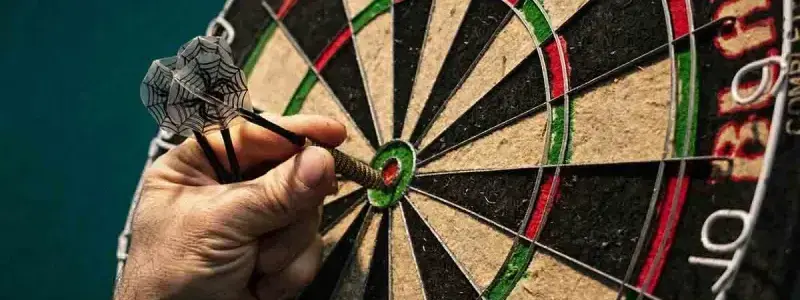
Doubles Drills: Stop Choking on the Finish
Tops for the leg, and your first dart drops into the single 5. The second clips wire, the third buries itself in the fat 20 — and the leg walks across the room to your opponent.
Scoring gets the glory, but doubles win legs. If you can throw ton-forties and still lose, this is the practice you've been skipping.
Why Doubles Feel Harder Than Trebles
A double is a thin outer band with a wire on each side, and you usually face it with the leg on the line. The target's small, but pressure is the real difference — nobody's nervous at treble 20 on a fresh leg.
So doubles practice has to include consequences. Drills with resets and stakes train the moment, not just the target.
Drill 1: Doubles Round the Board
Start at double 1 and climb to double 20, advancing only on a hit. Record the total darts for the lap, then chase that number every session.
It's the foundation drill because it kills favoritism. Matches will park you on double 7 whether you like it or not.
Drill 2: The 27 Game
Begin with 27 points and throw three darts at double 1, then double 2, all the way up to double 20. Every double you hit adds its value to your score; miss with all three darts and you subtract it instead.
Drop below zero and the game's over — start again. Serious players love it because a bad patch actually costs something.
Drill 3: Favorite-Double Lockdown
Pick your go-to out — double 16 or tops for most players — and throw 50 darts at it, recording your hit rate. Owning one double changes how you set up entire legs.
Double 16 earns its reputation: miss inside and 16 leaves 8, then 4, staying on even numbers all the way down. There's no awkward odd-number repair shot. Halve once more, though, and you land on 2 in the madhouse, where double 1 is the only escape and everything else busts the visit.

- Built to official tournament specifications for serious practice and match play
- Dual-density core improves dart retention and keeps the board playing consistently
- Ultra-thin wiring increases the scoring area and cuts down on bounce-outs
Drill 4: Checkout Ladder
Set a real two-dart finish — 32, 40, 60, 81 — and complete it, setup dart plus double. Climb to the next number only when you close the current one.
It trains the full sequence a match demands, not just the final dart. Keep a darts checkout chart by the board until the standard outs are automatic.
Which Doubles to Learn First
Don't try to own all twenty-one targets at once. Build outward from the ones matches actually hand you.
- Your anchor: double 16 or tops, drilled until it's boring.
- The half chain: 8, 4, and 2, where your inside misses send you.
- Everything else: let doubles round the board keep the rest warm.
Add Pressure on Purpose
- End every session on a hit double, however long it takes.
- Play the 27 game with a small forfeit for busting.
- Announce your target hit rate before you throw — mild embarrassment is great training.
Pressure you rehearse is pressure you recognize. That's the secret behind players who look ice-cold on the outer ring.
Give Doubles Equal Billing
Most players tack five reluctant minutes of doubles onto an hour of treble 20. Flip that ratio inside a structured session like these darts practice routines.
What's a good doubles hit rate?
Casual players often sit under 20 percent, while decent league players land around 30 to 40 percent on match darts. Most people have no idea what their real number is, so track your darts stats honestly for two weeks before judging.
Should you aim at the wire or the middle of the bed?
Middle of the bed, always. Center your aim and half your misses still catch the double; hunt the wire and near-misses turn into no-scores.
Ten minutes on double 16 tonight — miss, adjust, and stay until one sticks.
The Mental Game: Why You Choke at the Double
Practice Routines That Actually Move Averages