
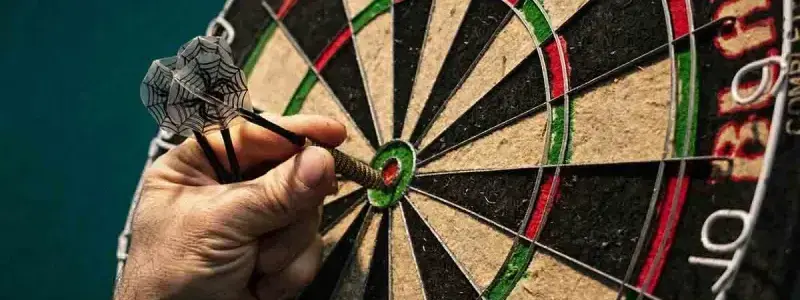
Double In vs Double Out: The Rule Flip
Your opening visit is a gorgeous 140, and the chalker writes down a fat zero — you never doubled in, so none of it counted. Ten minutes into 301 night, and you're learning the difference the hard way.
That's the trap. Double-in and double-out are the two "double" rules that shape how an 01 game starts and ends, and mixing them up is the fastest way to lose points you thought you'd scored.
The Two Rules in Plain Terms
Double-out means your final dart must land in a double — or the inner bull, which counts as double 25 — to win the leg. Double-in means none of your darts count until one lands in a double; your scoring clock starts there.
They're independent rules, so a game can use one, both, or neither.
| Double-in | Double-out | |
|---|---|---|
| What it governs | How scoring starts | How the leg ends |
| The rule | Darts don't count until you hit a double | The last dart must land in a double |
| Bullseye | Inner bull gets you started | Inner bull can finish the leg |
| Where you'll meet it | 301, some league formats | Standard 501, all pro play |
Where You'll Meet Each Format
Standard 501, including professional play, is straight-in, double-out. You score from the first dart but must finish on a double.
Double-in traditionally lives in 301, usually played double-in, double-out. The shorter starting score would end too fast otherwise, so the entry double works as a gatekeeper.
Soft-tip leagues on electronic dartboards often soften both ends, with formats like open-in, open-out or master-out (finish on a double, treble, or bull). House rules vary, so ask before the first dart.
How Double-Out Changes Your Game
Double-out turns the end of a leg into a different sport. Piling up big scores is only half the job — you still have to navigate down to a finishable number and hit a ring a few millimeters tall.
It also introduces the bust. Go below zero, land on exactly 1, or reach zero without a double, and the whole visit is wiped — your score resets to where it stood before the turn.
That's why players manage their leave. Sitting on 32 or 40 beats sitting on 31 every time, because an even leave means one clean dart can end it.
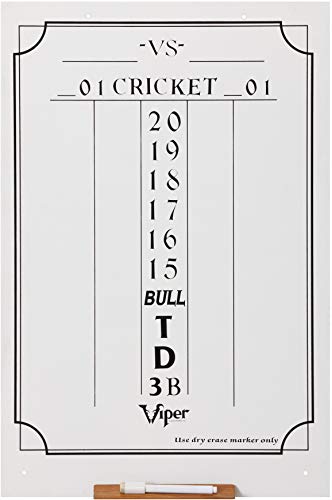
- Purpose-made layout tracks Cricket and 01 games at a glance
- Smooth surface works with any dry erase marker, and one comes included
- Mounting hardware is included for easy setup on a wall or cabinet door
How Double-In Changes Your Game
Double-in front-loads the pressure. A cold start can leave you throwing at doubles for two or three visits while your opponent races ahead.
Most players pick one entry double and camp on it — double 20 for the points, or their favorite finishing double for the comfort. Once a dart lands in it, that dart counts and everything after flows normally.
One wrinkle catches newcomers: only darts from the entry double onward count. If your third dart is the one that doubles in, the first two are dead.
Which Format Should You Play?
For learning the sport, straight-in, double-out 501 is the standard for a reason. You get scoring practice every visit and finishing pressure every leg.
Add double-in games once your doubles need work. Nothing sharpens the outer ring like needing it at both ends of the leg.
Does the bullseye count for doubling in or out?
Yes on both counts — the inner bull is double 25. It can start a double-in game or finish a double-out one.
What happens if I bust in double-out?
Your turn ends immediately and your score returns to what it was before the visit. Darts already thrown that turn don't count.
Is double-in used in professional darts?
Major professional 501 events are straight-in, double-out. Double-in survives mostly in 301, casual play, and some league formats.
Before any money or pride goes on the line, confirm two things: how you get in, and how you get out.
301 Darts: The Short Game With Sharp Teeth
501 Darts Rules: One Mistake Ends Your Leg