
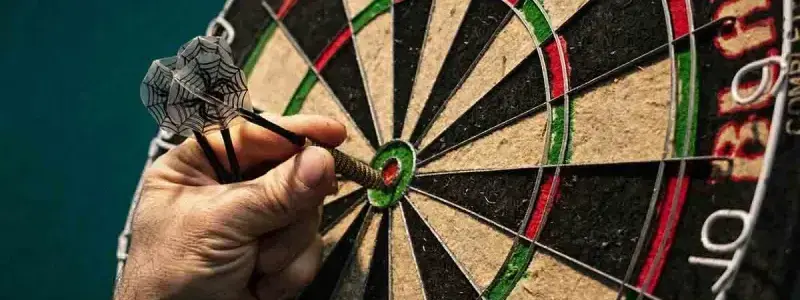
Bogey Numbers: 7 Scores That Kill Your Leg
The treble 20 you wanted lands flush — and strands you on 169. Your opponent doesn't even pretend to look worried, because no three darts on that board can finish it.
What's a Bogey Number?
A bogey number is a score you can't check out with the three darts in your hand. In 501, where the leg must end on a double, exactly seven scores between 2 and 170 are mathematically impossible to finish in one visit.
They are 169, 168, 166, 165, 163, 162, and 159. Land on any of them and you're guaranteed another turn, no matter how well you throw.
Why These Seven Numbers Can't Be Finished
The biggest checkout in darts is 170: treble 20, treble 20, bullseye. That works because 60 plus 60 plus 50 hits the total and the bull legally counts as a double.
Everything before your final double has to come from two darts, and two darts max out at 120. A three-dart finish only exists when your score minus some double (or the 50 bull) can be built from two darts — and for these seven scores, the sums never land on a real double.
| Bogey score | Two treble 20s leave | The problem |
|---|---|---|
| 169 | 49 | Odd — no double makes it |
| 168 | 48 | D24 doesn't exist |
| 166 | 46 | D23 doesn't exist |
| 165 | 45 | Odd — no double makes it |
| 163 | 43 | Odd — no double makes it |
| 162 | 42 | D21 doesn't exist |
| 159 | 39 | Odd — no double makes it |
The table shows the best-case start, but every other two-dart start fails the same way. Each bogey dies for its own small arithmetic reason; the pattern is always "no double on the board completes the sum."
Isn't 167 a Bogey Number Too?
No, and this catches plenty of players out. The bull rescues 167: treble 20, treble 19, bullseye — 60 plus 57 plus 50.
The same trick saves 164 (T20, T18, Bull) and 161 (T20, T17, Bull). The four bull finishes — 170, 167, 164, 161 — are exactly the scores above 160 that stay alive.
Why Bogey Numbers Matter Strategically
Good players count ahead so they never leave themselves a bogey. Sitting on 169 instead of 170 is the difference between a possible one-visit win and a guaranteed free turn for your opponent.
That's why you'll see a pro switch targets mid-visit. If treble 20 would leave 168, they'll take a single or a different treble to leave 170, 167, or a clean two-digit finish instead — the kind of route planning covered in 501 strategy.
How to Avoid Getting Stranded
The fix is awareness, not fancy math. Before each visit, know what your likely darts would leave you on.
- Memorize the seven bogeys as one set: 159, 162, 163, 165, 166, 168, 169
- Memorize the four bull finishes that bracket them: 161, 164, 167, 170
- Scoring down from 200-plus, aim to leave 170 or less while skipping the bogeys
- In doubt, an extra single 20 or single 19 usually steers you clear
Learn them alongside the routes themselves in our complete checkout chart, where all seven bogeys are marked. Once you've seen them in context, they're hard to forget.
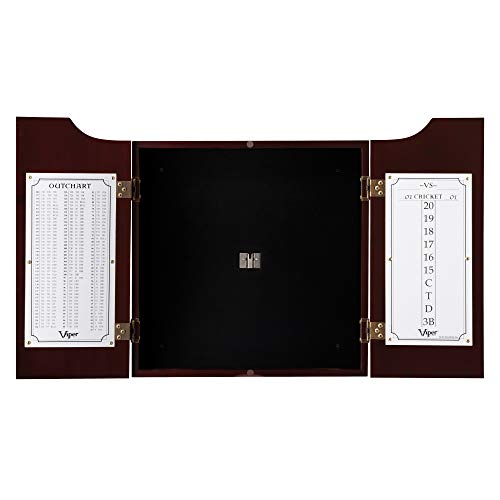
- Solid pine construction with box joints and bronze hinges is built to last
- Main compartment fits all official tournament-sized bristle dartboards
- Dry erase scoreboard and out-chart on the doors keep scoring close at hand
Bogey Number FAQ
Are there bogey numbers below 159?
No — every score from 158 down to 2 can be finished in three darts or fewer. All seven bogeys live between 159 and 169.
Do bogey numbers exist in 301 or other games?
Yes, the same seven scores apply in any x01 game that ends on a double. They come from the board and the double-out requirement in the rules of 501, not from the starting total.
Next time you're above 170, do the small math early and never hand your opponent a free visit.