
Setup Shots: The Secret of Smooth Finishers
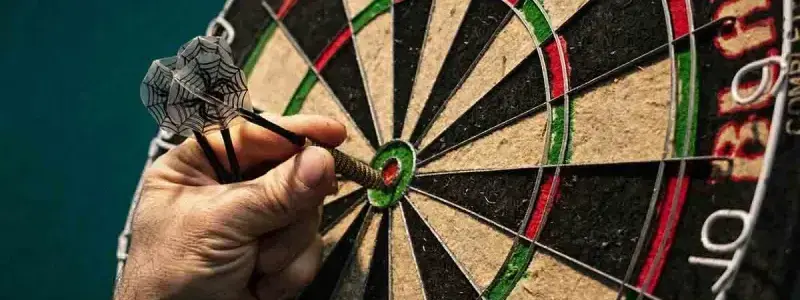
Your third dart drifts off the 16 and into the 7, turning a tidy 48 into 41 — an odd number no single dart can finish. The players who never seem to land in that mess aren't luckier than you; they're throwing setup shots.
What a Setup Shot Is
A setup shot is a dart thrown not to win the leg, but to leave the exact number you want to win from. Instead of hoping the math falls kindly, you steer your score onto a double you actually like.
It's the difference between standing on 32 by design and standing on 23 by accident. Most good finishing is really good setting up.
Why Pros Park on 32 and 40
Ask experienced players for their favorite leave and you'll hear 32 (double 16) or 40 (double 20) almost every time. The 32 comes with a famous safety net: miss double 16 into the single and you're on 16, which is double 8 — miss inside again and you're on double 4.
Every inside miss halves you onto a fresh double without wasting a dart. On 40, a single 20 still leaves double 10 — fine — but a stray 5 or 1 dumps you on an awkward odd number.
The Golden Rule: Stay Even
Every double is an even number, so an even leave can always be taken out with one dart. An odd leave always costs an extra dart to repair.
That single idea drives most setup decisions:
- On an odd score, throw an odd number first — single 19, single 3, treble 19 — to get even
- On an even score, protect it; don't throw darts that can strand you odd
- Prefer leaves like 32, 40, 24, and 16 that halve cleanly when you miss inside
Plan the Visit, Not the Dart
Before you throw, know what all three darts are for. Say you're on 61: single 25 leaves 36, or treble 15 leaves 16 — either way, dart one is a pure setup shot.
Compare that to firing blindly at treble 20. Hit it and you've left 1, which is a bust on the spot.
Setup Routes Worth Memorizing
| You're on | Setup dart(s) | You leave |
|---|---|---|
| 39 | Single 7 | 32 (double 16) — the textbook odd-number fix |
| 50 | Single 18 | 32 — safer than gambling at the bull |
| 61 | Single 25, or treble 15 | 36, or 16 |
| 81 | Treble 19 | 24 (double 12) |
| 99 | Treble 19, then single 10 | 42, then 32 |
Notice how many routes funnel into 32. That's not superstition — it's the halving safety net doing its job.
A full out chart gives you the standard route from every score. Setup shots are just those routes played on purpose.
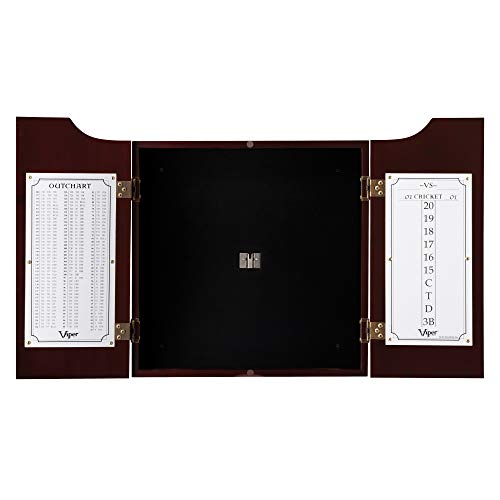
- Solid pine construction with box joints and bronze hinges is built to last
- Main compartment fits all official tournament-sized bristle dartboards
- Dry erase scoreboard and out-chart on the doors keep scoring close at hand
Mistakes That Wreck Finishes
- Throwing at trebles when a single would leave a perfect double
- Leaving odd numbers through carelessness rather than bad luck
- Setting up a double you never practice instead of the one you actually hit
- Winging the math mid-visit with one dart already in your hand
Quick Answers
What's the best double to set up for?
The one you hit most often — for many players that's double 16, thanks to its halving chain. Track your own practice numbers instead of copying anyone else's favorite.
Should beginners bother with setup shots?
Yes — earlier than anything else in strategy, because setup play demands no extra accuracy. It's pure decision-making, and it's free.
Pair it with doubles practice drills and your finishing improves from both ends.
What if I bust anyway?
A bust returns your score to where the visit started, per standard 501 rules. Setup thinking cuts busts down precisely because you stop throwing big darts at small numbers.
This week, pick one double, learn its three best leaves, and give every third dart a job.
Checkout Chart: Every Finish From 170 Down
Bogey Numbers: 7 Scores That Kill Your Leg